
Shadows at the Counter
Unpacking the quiet desperation of Charles Bonet’s Deadhorse Coffee

This past Thursday night, I had the chance to see a staged reading of a locally written one-act play, Deadhorse Coffee, by Charles “Chuck” Bonet. The team over at Stage 13 was kind enough to lend their space for the performance and allowed members of our wonderful community to join in the viewing. The one-act told the story of three individuals, Sal, Etch, and Miles, whose down-and-out lives came to connect within the walls of a small-town coffee shop. Throughout the performance, we saw the characters deal with the heavy burdens of guilt, grief, and greed, all while using a sharp, biting humor to mock the reality of their circumstances. It was an incredibly poignant, well-delivered piece that painted a raw picture of the “dying towns” of Americana. After the reading, I sat down with Chuck to discuss the inspiration behind this work in progress and where the Deadhorse story is headed next.
The World and Setting

The “dying Americana” atmosphere is palpable in the play. Was Deadhorse Coffee inspired by a specific town, or is it intended to be a composite of the disappearing small-town landscape?
Charles Bonet: I grew up in Washington State, and there is a town called Aberdeen out near the west coast of the state. It is the hometown of Kurt Cobain, so you could call it the birthplace of 90s grunge music. It was once a thriving fishing and timber town, and when those industries dried up, the town fell into a deep economic depression that it has struggled to climb out of. It is a sad, dreary place, but also one with character and history.
The play mentions several specific locations—the school, the medical facility, and the city of the funeral. Do you envision these as named locations, or do you prefer keeping them somewhat anonymous to universalize the characters’ struggle?
Charles: As of now, those are intentionally nondescript. But, as the piece grows, that may change. I think Deadhorse may need some specificity.
Coffee shops are often seen as “third places” or community hubs. Why did you choose this specific setting for Sal, Etch, and Miles to collide?
Charles: I just love coffee shops! I find them interesting, especially in small towns where they often become a fabric of the community. I remember driving through Aberdeen one day and stopping at a little diner called Simpson’s, which was on the outskirts of the town. The same group of old men gathered there almost every morning to drink black coffee and chat. It was that idea of a sort-of found community space that appealed to me.
Character and Conflict
Each character grapples with a different hurdle in their life—guilt, grief, and greed. Did the play start with these themes, or did the characters develop these specific burdens as you wrote them?
Charles: Initially, I wanted to explore the idea of a “shitty attitude” being the worst sin in life. Then it morphed into a story of stunted potential. The guilt of Sal, grief/bitterness of Miles, and greed/desperation of Etch came from that.
Sal’s journey through recovery and Miles’s complicated inheritance offer very different stakes. How did you work to balance the humor of their situations with the gravity of their personal crises?
Charles: Death and addiction are not really that funny, but the characters use the humor as a coping mechanism. My hope is that Sal’s pain and Miles’ bitterness always remain central to their characters. It is the thing that they need to overcome. The dialogue/dynamic between the two underwent a good deal of revision to try and maintain this.
The mystery of the “loan shark/muscle” and the mentioned, yet unseen, woman adds a noir element to the story. What was the internal logic behind keeping the “boss” figure off-stage?
Charles: I felt like there needed to be a disruption, an outsider element to the story. I felt that keeping the exposition to a minimum would be more effective. However, I will look to expand this part of the story as I continue to work on the play. Xander did such a great job with the character of Jake that I want to discover more about him and I want to explore more about the woman he works for.
The Creative Process
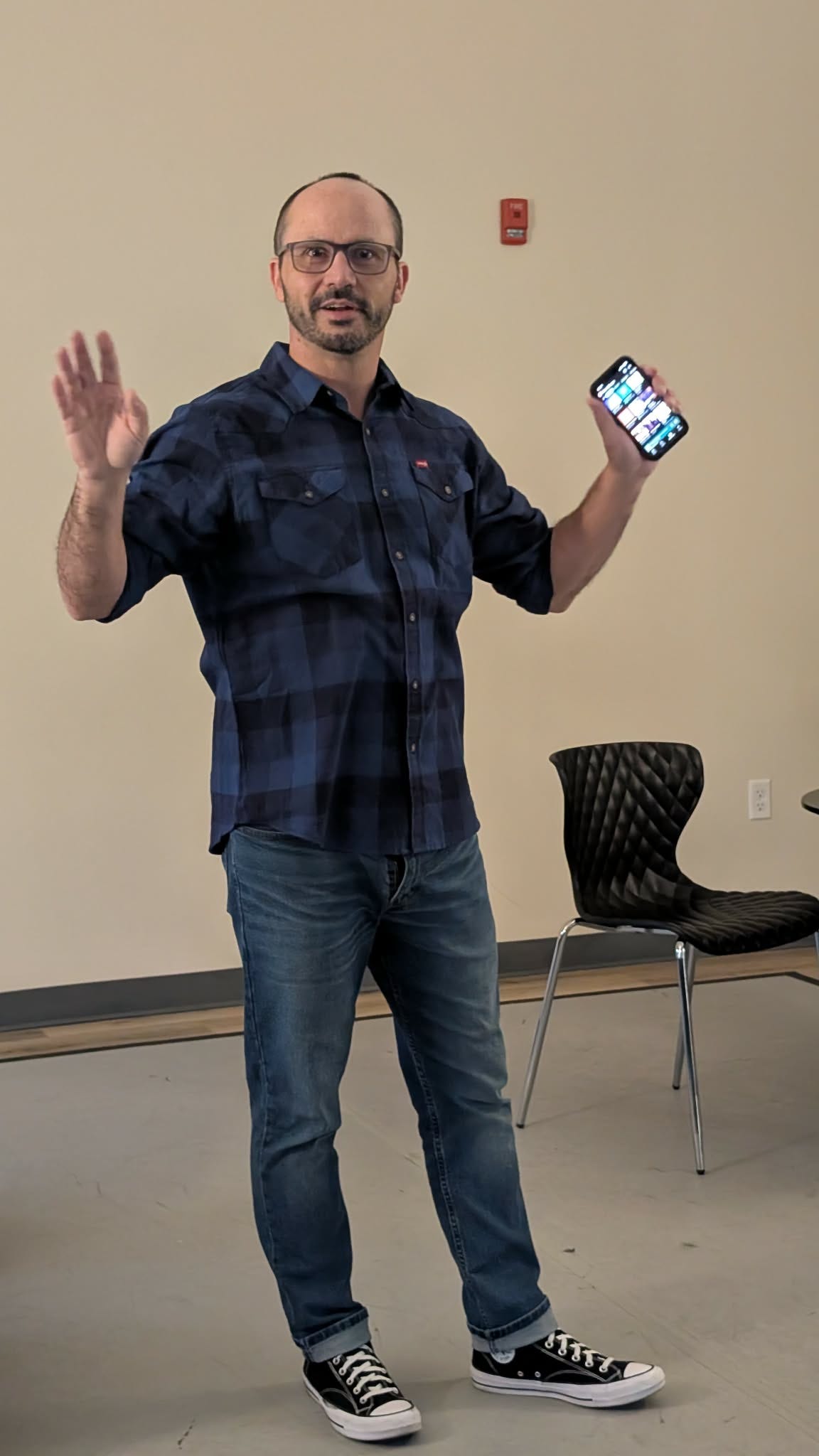
You’ve been developing this piece for about a year. How has the script changed since its earliest drafts, and did last night’s reading reveal any new layers to the dialogue?
Charles: It has undergone so many changes that I have lost count. I am a constant tinkerer. The wonderful thing about theatre is that a play can constantly evolve. I’m always trying to eliminate unnecessary dialogue and find more interesting dynamics and situations. It’s had at least 4 different titles, the Terry character didn’t even speak in earlier drafts, the town was completely unnamed at one point, and the Jake character expanded completely. Thursday night’s reading, more than anything, gave me a better idea of the tone I want to achieve. That’s something I hope to be able to work with the actors on as we continue to develop the play.
Jake is such an intimidating, pivotal presence at the end. How do you determine the “right” amount of time for a character like that to be on stage before the mystery loses its edge?
Charles: I think there has to be something dangerous and ominous about a character like Jake. Maintaining that is tricky because a character like Jake tends to become less dangerous and ominous once the audience thinks they have him figured out. It is something I will continue to tinker with because I love the character and I want more of him, but I also want him to remain mysterious to a certain extent.
As a writer, how do you approach using humor to “mock or spite” the reality of a character’s situation without losing the audience’s empathy for them?
Charles: I think that if you love your characters and really want to stay true to them, that will ultimately keep you from slipping into mockery or mean-spiritedness. In an early draft, Sal goes to Miles and basically tells him she’s only interested in him because he could potentially be rich. As the piece progressed, I just found that to be silly, mercenary, and unfair to the character. The humor in a piece like this has to come from a place of vulnerability. It has to be a means of coping.
Future of the Piece
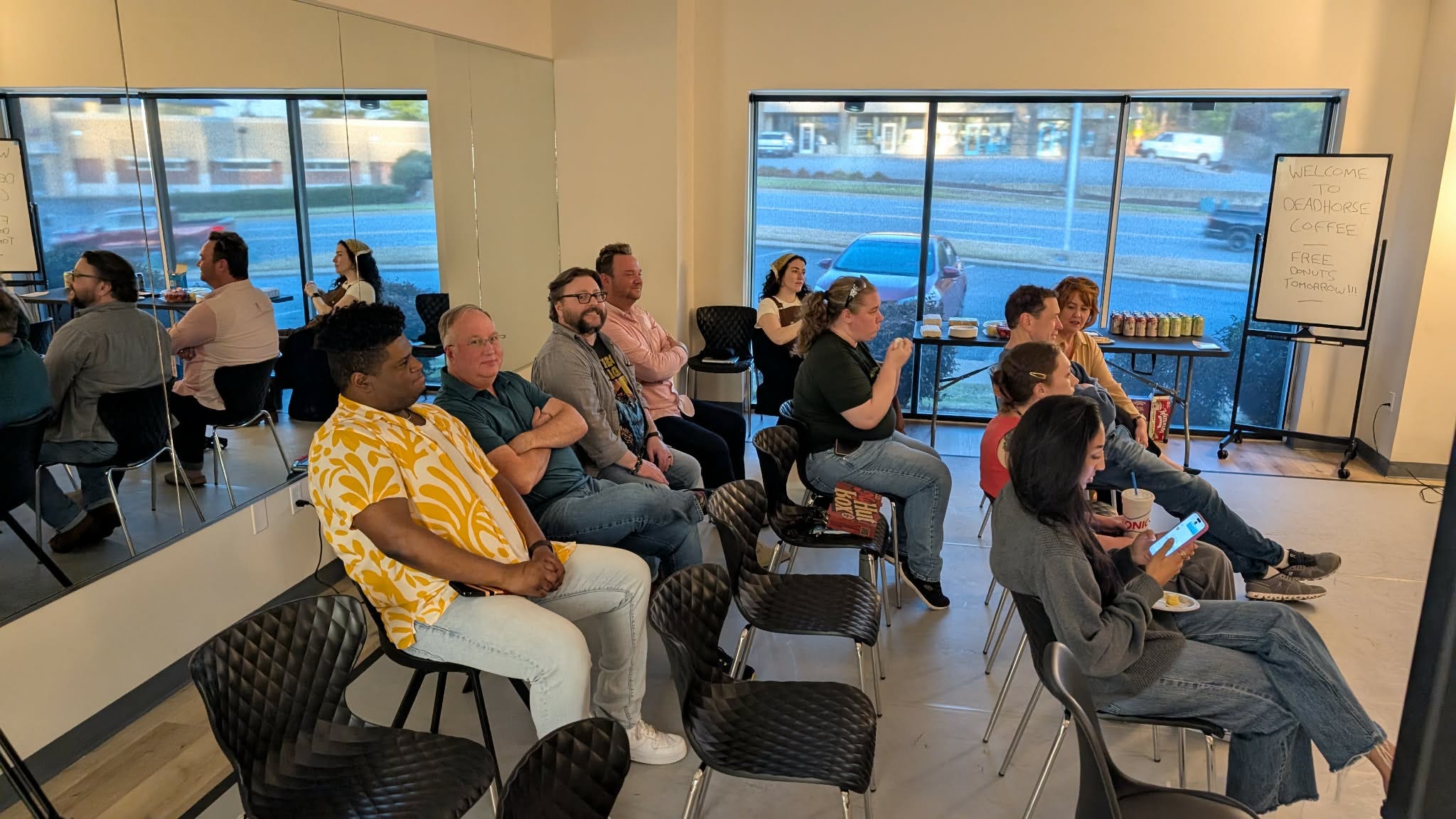
Seeing the play as a work in progress, what are the primary elements you’re looking to refine or expand upon as you move toward a full production?
Charles: The response was very positive, but people seem to want to know more about these characters. Steve Jones said that it was like Sam Shepherd, but just needs to be more Sam Shepherd-y. Quinn Gasaway mentioned that it may have needed to be “weirded up” some, à la Martin McDonagh. I agree with both of these statements completely. I think I want to expand the world outside of the coffee shop, see more of Deadhorse. I want to explore the history of Deadhorse in a more in-depth fashion. The town and the brief history Terry provides at the end are meant to be a metaphor for the stunted growth of Sal, Miles, and Etch, so I think there is an opportunity there. And I think there just needs to be more action. I’m not sure how I will achieve that, but I’m looking forward to trying.
What do you hope audiences take away about the connectivity of people living in these “down-and-out” circumstances?
Charles: I’ve always loved the quote from Thoreau: “The mass of men lead lives of quiet desperation.” I think it is an idea that’s almost universally relatable, and these characters embody that in their own way. Nowadays, more of us find ourselves living a day-to-day life, just trying to get by and provide for ourselves and our families. We’ve been conditioned to escape into our screens, but that doesn’t mean we can’t still find human connection, that we can’t still try and find some joy.
A huge congrats to Xander, Peter, Alexandria, and Chris for taking part in this and helping to bring it to life. You did an amazing job embodying the characters and giving Little Rock a taste of what’s to come as this continues to grow!
For an original, locally written piece that has only been in the works for a year, Deadhorse Coffee managed to be remarkably engaging. There were moments during the reading where I found myself so drawn into the dialogue and the high-stakes introduction of Jake that I couldn’t even bring myself to look away to write notes. While Charles plans to continue tinkering with the history of the town and the depth of the characters, the foundation is already incredibly strong. It’s a story that reminds us that even in a place that feels like it’s dying, the desperate search for human connection remains very much alive.