

Last night, I was given the opportunity to attend The Cake within the intimacy of Argenta Contemporary Theatre’s blackbox space, which served as a surprisingly effective crucible for the production. Directed by Heather Dupree, this production of Becca Brunstetter’s acclaimed play strips away the distance between performer and audience, forcing us to confront the raw, often uncomfortable realities of the human condition. In such a compact environment, every breath and every unspoken glance carries an enormous weight to it, turning the space into a deeply personal, almost voyeuristic experience that defines the power of local theatre. It is a rare privilege to watch a piece of drama unfold just a few feet away, where the sweat on the actors’ brows and the flicker of hesitation in their eyes become as integral to the storytelling as the dialogue itself.
For those planning to attend, I do offer one logistical note: seek a seat toward the front of the house. I opted for the periphery to remain unobtrusive while taking notes, but in doing so, I found that the blocking occasionally sacrificed detail in the downstage corners. Much of the brilliance in this play lies in the subtextual reactions of the characters when they aren’t the primary focus; so sitting closer ensures you capture the complete tableau, which is essential given the precision of Dupree’s staging. In this specific configuration, the set feels like a dollhouse with its walls removed, offering a perspective that is both inviting and intrusive. You are effectively living in their storefront, sharing the air of their discomfort, and bearing witness to the unspoken fractures that define their existence.
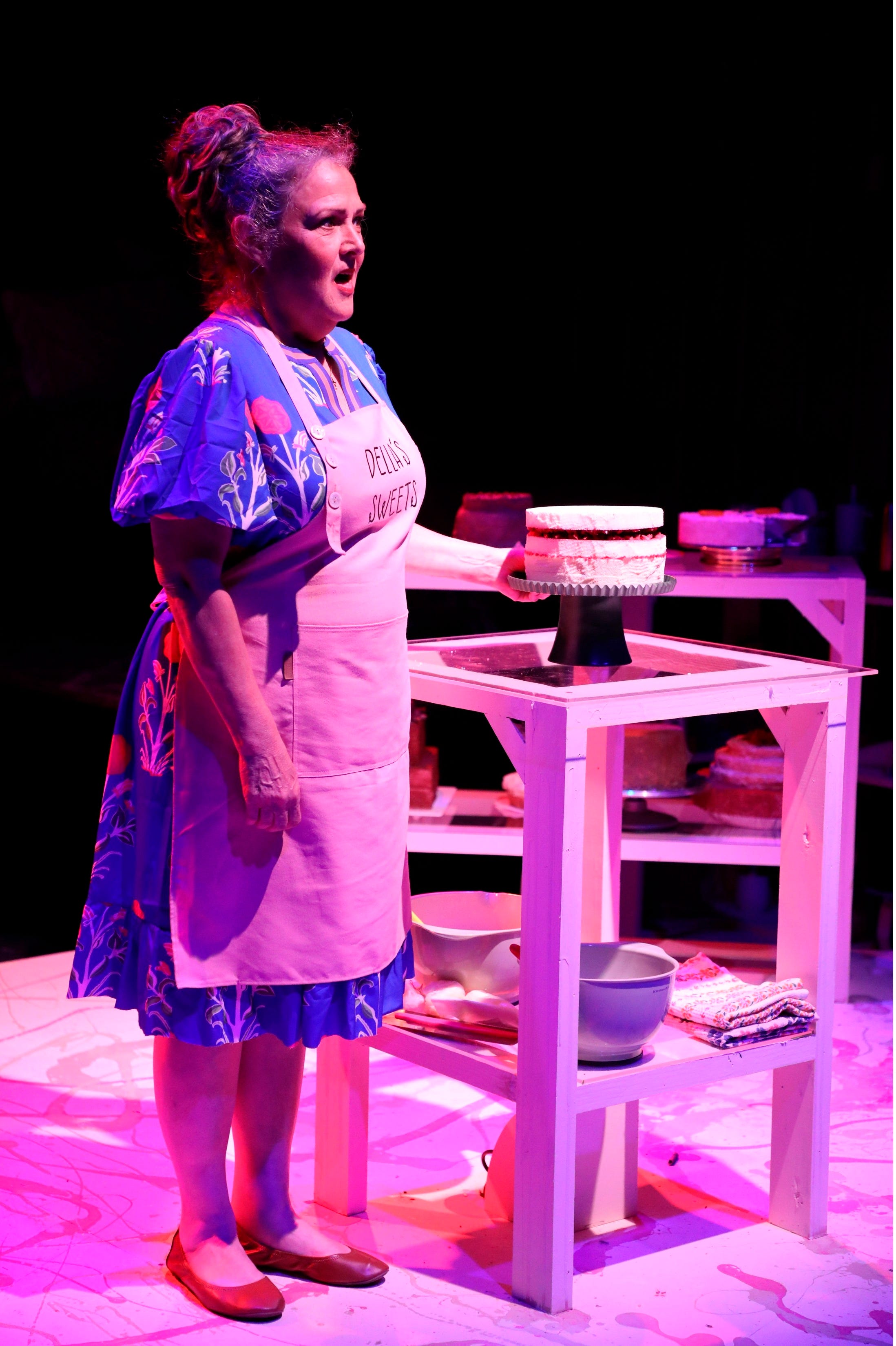
The set design effectively navigates the show’s bifurcated structure. The downstage portion displays a meticulously realized cake shop, the domain of Della, played with a haunting, multifaceted warmth by Natalie Canerday. The upstage area is partitioned to represent two distinct worlds: the transient atmosphere of the bed of Jen’s extended family, where Jen and Macy reside for this trip, and the bedroom of the private home of Della and her husband, Tim. This spatial dichotomy mirrors the thematic friction of the script, highlighting the literal and figurative distance between these characters. The flow between these zones is seamless, suggesting that while the physical distance is minimal, the psychological chasm between the characters is vast. The transition between the domestic warmth of the bake shop and the chilly isolation of their respective bedrooms creates a rhythmic tension that carries the audience through the ninety-minute runtime without a single moment of stagnation.
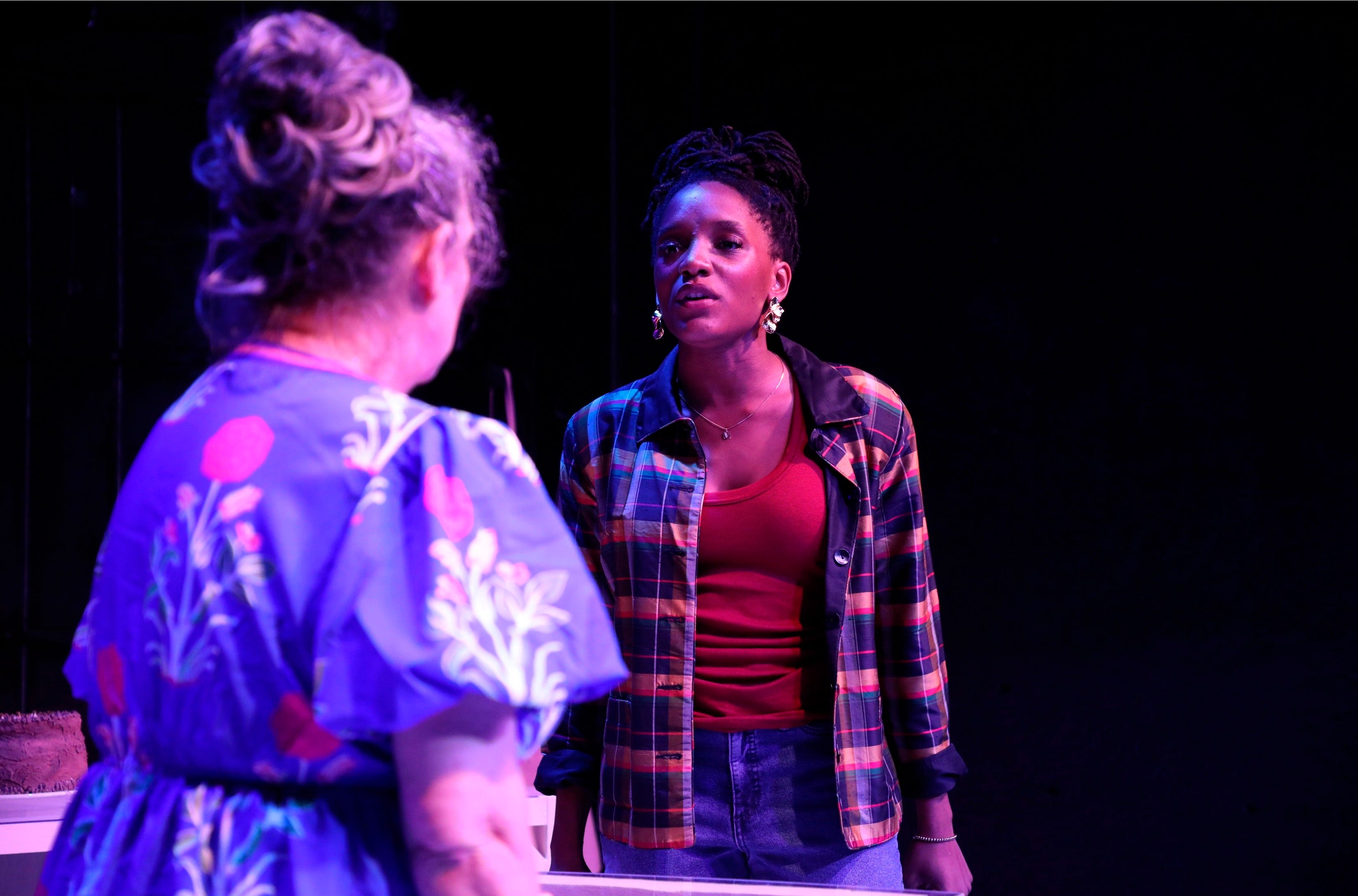
The narrative arc begins in North Carolina, where Della meets Macy, an investigative journalist visiting from out of state (for reasons yet to be revealed to both the audience and Della). Macy, who writes for progressive outlets like the Huffington Post, serves as the story’s intellectual catalyst. It is a sharp character choice by Brunstetter to give Macy this background, as it immediately establishes her worldview without resorting to caricature. While Macy and Della are ideologically diametrically opposed, Macy’s approach is not one of condescension. Rather, she navigates her interactions with a profound, learned patience, attempting to foster understanding even when the cultural gap feels insurmountable. There is a palpable effort on her part to translate her own reality into something Della can process, a feat of emotional labor that often feels sisyphean. Watching her balance her professional detachment with her personal desire to be accepted by her partner’s family is a masterclass in subtlety.
Jen serves as the heart of the conflict, having grown up in this small, conservative community she returns home carrying the burden of an identity that clashes with the religious traditions that raised her. The play is suffused with the specific, inescapable gravity of Southern life, capturing the unique anxiety of returning to one’s roots only to find that the soil has grown barren for you. When Jen hesitates to identify Macy as her fiancée, Macy’s refusal to let the moment pass is both a source of tension and a necessary turning point. It forces Jen to confront her truth, and consequently, it forces Della to confront a reality she has never had to navigate: the sudden realization that the “Jenny” she remembers is not the woman standing in front of her. Della’s subsequent retreat, claiming her October baking schedule is suddenly “too full”, is a stellar showcase in the politeness of prejudice, a way to maintain the veneer of a “good Southern woman” while actively denying the humanity of the queer couple before her. This is not a mustache-twirling villainy, but a far more common, insidious variety of exclusion that disguises itself as convenience.
Across this 90-minute journey, the production expertly navigates the confluence of queerness, Southern heritage, and the complex trauma of family dynamics. It touches on the grief of losing parents, both in the literal sense and in the metaphorical loss of parental validation. It is a testament to the cast and director that this was handled with such grace, moving the audience not through didacticism, but through the hard, lived-in reality of these characters. It served as a difficult mirror for those of us in the community who have witnessed, or personally experienced, this specific flavor of rejection. The brilliance of The Cake is that it refuses to offer easy absolution. It forces the characters, and the audience, to sit in the discomfort of their own contradictions, asking us if we are capable of growth when our most cherished beliefs are directly challenged by the people we love the most.
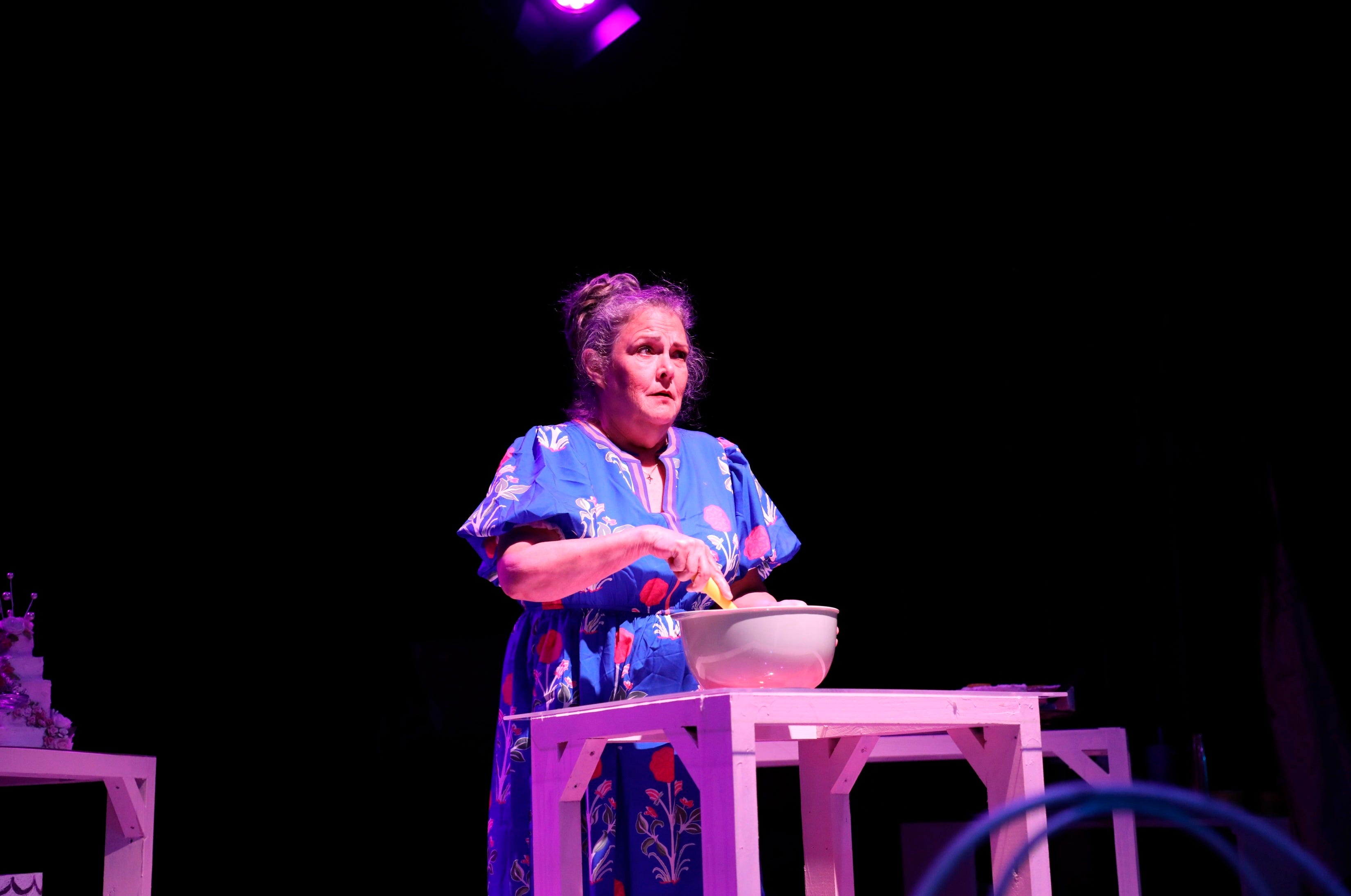
Natalie Canarday’s performance is, as the local buzz suggested, the spine of this production. With a resume spanning over 100 stage productions and 50 films, she carries an effortless command of the stage. Canerday manages an extraordinary emotional tightrope walk; she oscillates between the quintessential, charming Southern grandmotherly figure whose stream-of-consciousness, non sequitur speaking, provides much-needed levity, and a woman who has essentially vanished into the routine of her labor. Watching her portray a woman who has forgotten how to be satisfied, only to find a desperate, painful awakening through her craft, was certainly a highlight of the production. She finds nuances in Della’s silence, using her posture and her full self to convey a lifetime of repression and internalized doubt. It is a deeply vulnerable performance that anchors the entire play in a human reality that makes the broader political debates feel intimate and vital rather than abstract.
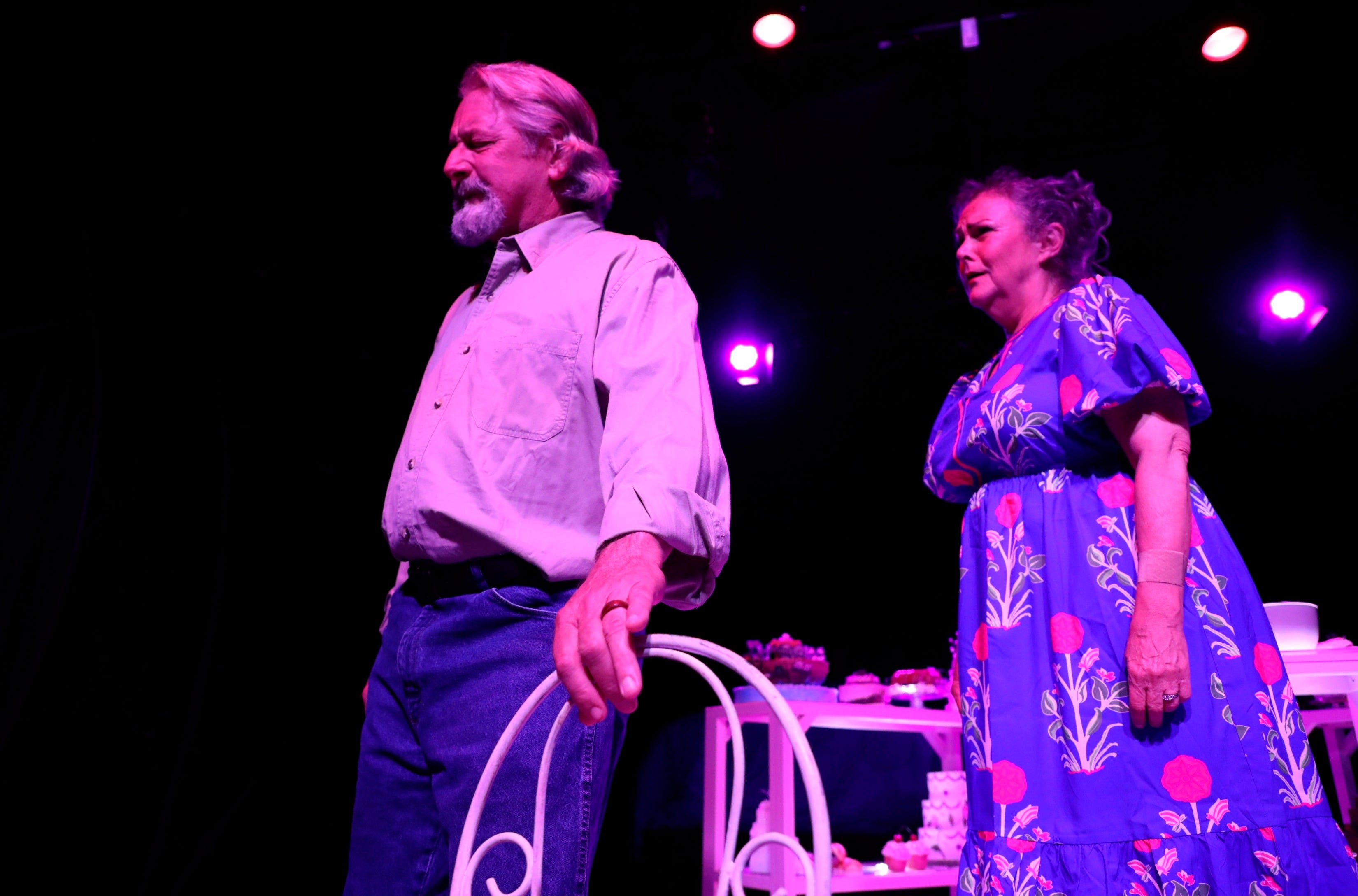
Opposite her, Jeff Bailey’s portrayal of Tim is an exercise in restraint and empathy. In a play so focused on feminine perspectives, Bailey’s Tim provides a necessary, grounded look at the masculine experience within a traditional framework. The climax of the show is particularly devastating because of his contribution; he portrays a man whose resistance to Jen’s life is born of deep-seated, learned rigidity rather than malice. It is an honest, unvarnished look at how even well-meaning people struggle to evolve in a rapidly changing world. Bailey brings a gentle, weary quality to Tim that makes his eventual moment of clarity all the more earned. He represents the silent partner, the one who watches as the foundations of his life are shifted by forces he is only beginning to comprehend (if comprehend at all), and his performance is a vital counterpoint to the more overt volatility of the other three characters.
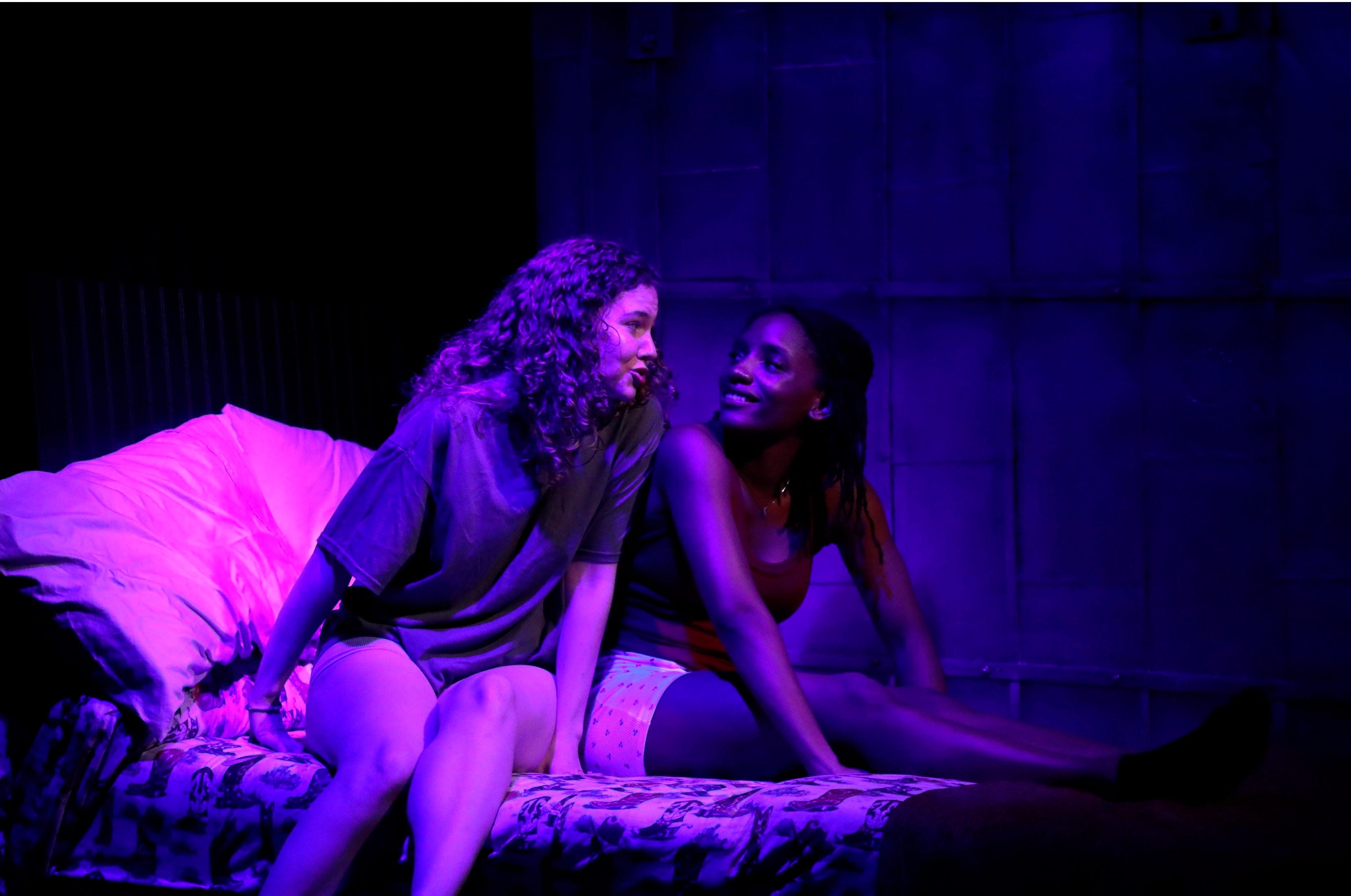
The chemistry between LeAnne Roberson (Jen) and Melody Small (Macy) is the engine that drives the play’s emotional resonance. Their interaction feels entirely unscripted; the way they navigate the comfortable, lived-in cadence of a couple who have shared life’s peaks and valleys is remarkably natural. Roberson, in particular, displays an evolving pool of talent that I have watched grow for years. Her ability to navigate the internal dissonance of a queer woman returning home to a place that may no longer recognize her is a performance of immense bravery. She captures the specific ache of wanting to be known and loved for who you are by the very people who defined you before you knew yourself. Small, meanwhile, brings a sharp, necessary clarity to the role of Macy. Her delivery is devoid of the preaching often associated with such characters; instead, she plays Macy as a woman who has grown accustomed to the exhaustion of teaching, yet remains committed to the work of bridge-building. Together, they create a portrait of modern queer love that is both celebratory and deeply pragmatic, highlighting the realities of navigating a world that isn’t always designed for them.
Even the unseen characters are handled with precision. Brandon Paul Eells, lending his voice to the Great American Bake Off host, George, provides a brilliant, satirical foil to the heaviness of the main plot. His voice-overs serve as a sonic representation of the media-saturated, performance-driven culture that Della is obsessed with. These moments of levity were vital, providing the audience with a necessary release before descending back into the emotional thicket. The jarring transition between the high-energy, artificial world of baking competition television and the quiet, heavy reality of the kitchen scene is handled with masterful timing by the technical team. It emphasizes how Della uses the show as an escape, a way to focus on the trivial perfection of a sponge cake so that she doesn’t have to address the chaotic reality of her daughter-figure’s life.
Ultimately, Heather Dupree has crafted a production that feels profoundly vital to our current moment in Little Rock and communities found throughout the country. It is a story that knows its audience, speaks our language, and challenges our complacency. By stripping the narrative down to its core components, the team at Argenta has reminded us why live theatre remains the most effective medium for public discourse. The play succeeds because it does not try to solve the cultural divide with a lecture; instead, it invites us to sit with the protagonists in their kitchen, to taste the sweetness of the cake, and to reckon with the bitterness of the truth. It is a delicate balance, and one that requires a sure hand at the helm. Dupree has managed to ensure that every emotional beat hits with the force of a hammer while maintaining the lightness required to keep the audience engaged through the harder moments.
If The Cake is indicative of the standard for Argenta Contemporary Theatre’s upcoming season, we are in for a remarkable rest of the year. I strongly encourage anyone with an interest in challenging, poignant, and impeccably acted drama to secure their tickets immediately. The house was at capacity last night, and given the caliber of the work, I anticipate a sold-out run. Go support this talented company; their work is a vital contribution to our cultural landscape. We are incredibly fortunate to have a space like Argenta that is willing to take risks on contemporary scripts that speak directly to the complexities of the Southern experience. It is through these stories that we begin to see ourselves, our neighbors, and our own communities with a renewed sense of clarity and compassion.
Thank you for reading, and I hope to see you in the audience soon. It is always a pleasure to engage with such thoughtful, dedicated members of our local theatre community, and I am grateful for the chance to document this particular moment in our city’s ongoing theatrical dialogue.
Looking forward to seeing everyone who’s attending Joseph tonight at The Rep!
Photo Credit: Corbin Pitts